
GREECE × LATVIA · ERASMUS+
One gulf.
Many worlds.
Let’s explore.
Welcome to Amvrakikos! Discover where rivers meet the sea, birds find a home, and water connects us.
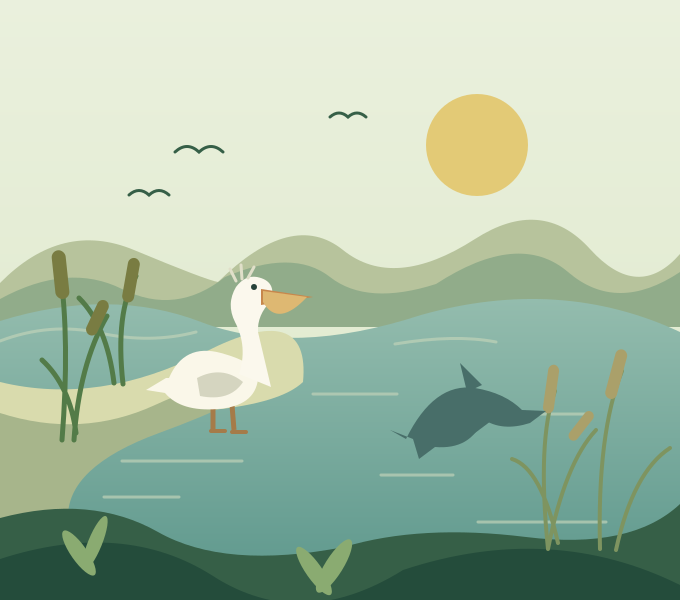
Different countries. Shared water. Work with a Greek or Latvian friend. Look, ask, listen and learn together.
Hello! · Γεια σας! · Sveiki!01 / OUR FIELD TRIP
Three stops. A new discovery at each.
Tap a stop to open its explorer mission. You can also do the missions in class.
Stop order follows the school’s plan. Your teacher confirms the timing, access and safe viewing places. Wildlife sightings are a surprise!
02 / A MOSAIC OF LIFE
Many homes, one connected world.
Amvrakikos is a gulf in western Greece. The Louros and Arachthos rivers bring fresh water. A narrow opening links the gulf to the Ionian Sea. [1, 2]
Meet the neighbours.
Open each card to learn how we can help.
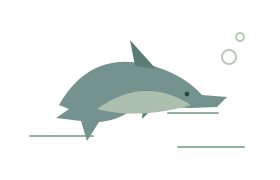 Local population: critically endangeredBottlenose dolphinTursiops truncatusMeet the dolphin
I live in the gulf. I am a mammal, so I come to the surface to breathe.
My challenge: polluted water and disturbance from boats. The Amvrakikos population is critically endangered. [3, 4]
Help me: watch quietly. Never chase or feed dolphins.
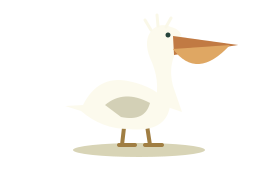 Protected birdDalmatian pelicanPelecanus crispusMeet the pelican
I catch fish with my large bill. Amvrakikos lagoons are a home for nesting pelicans.
My challenge: damage to my habitat, disturbance and collisions with power lines. [5]
Help me: keep away from nests. Use binoculars, not your feet, to get a closer look.
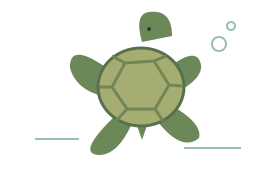 Protected sea turtleLoggerhead turtleCaretta carettaMeet the turtle
I find food in the gulf. I need to reach the surface to breathe air.
My challenge: getting caught in fishing gear and swallowing litter. [2, 4]
Help me: keep plastic out of the water. Tell an adult if you see an animal in trouble.
These animals face different risks. “Critically endangered” here describes the local dolphin population, not all three species.
03 / OUR WATER LAB
What changes under the surface?
Clear water can still have problems. Pollution and climate change can put extra pressure on living things.
Change the conditions.
Turn each switch on or off.
A learning model: it shows connections, not real measurements or a forecast. [4, 6, 7]
Climate change reaches the shore, too.
Hotter, drier summers can leave less fresh water for wetlands. Rising sea levels can change coastal habitats. Protecting wetlands helps wildlife and people. [4, 8]
Small explorers. Helpful actions.
Choose actions you will try. No names needed.
Choose your first action.
04 / EXPLORER CHALLENGE
Ready for a
little adventure?
Six quick questions. Think with a friend. Every answer helps you learn!
No timer. No names. You can try again.
BEFORE WE GO
Pack curiosity.
And a few useful things.
A water bottle, a hat, comfortable shoes and a small notebook. Binoculars are great if you have them.
Our explorer code
- Stay with your teacher and your group.
- Keep away from water edges and nests.
- Leave plants, shells and animals where they are.
- Take your litter home. Tell an adult about unsafe litter.
- Ask before taking photos of people.
For teachers: sources & guide notes
The stop names and order come from the school’s itinerary. Field missions are suggested learning activities, not confirmed bookings or live navigation. Neochori refers to Neochori, Preveza. Strongyli refers to Strongyli, Arta. Tsoupeli is used as the school’s stop name; no precise location or lagoon identity is assumed.
Simple English for primary pupils. Use with an adult. Illustrations are drawings, not identification photographs. The water lab is qualitative and cannot measure water quality. Progress stays in this browser when storage is available; no pupil names, scores or observations are sent by this guide.
- NECCA / ΟΦΥΠΕΚΑ: Amvrakikos protected area, habitats and wildlife
- Amvrakikos Alliance: geography and sea turtles
- Tethys Research Institute: local dolphin conservation status
- Amvrakikos Alliance: pollution, hypoxia, bycatch and climate change
- Amvrakikos Alliance / Hellenic Ornithological Society: waterbirds
- NOAA: nutrients, algae and oxygen
- NOAA: warmer water holds less oxygen
- IPCC AR6: climate risks in the Mediterranean
- Visit Preveza: Natural History Museum in Neochori
Sources checked: 11 October 2026.